Source Gas Electric Commercial Griddle for Bread, Pizza, and Breakfast
Source gas electric commercial griddle units from 30 verified listings. Compare models like GH-546 and EG-886, noting voltage, power, and material specs to find the right equipment for your kitchen needs; compare the available evidence and request quotations based on your requirements.
Key considerations
Products List




Comprehensive Sourcing Guide
Gas Electric Commercial Griddle Sourcing Guide
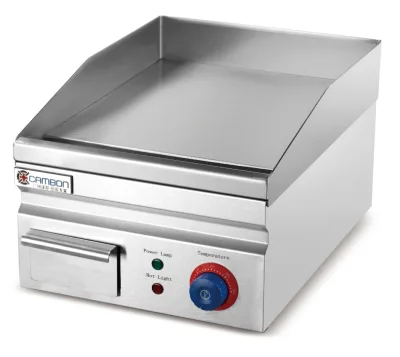
Procurement professionals must first distinguish between gas and electric power sources, as the supplied data reveals distinct operational profiles for each. Some units are explicitly listed with gas power sources and specific BTU ratings, while others rely on electric inputs ranging from 2000 watts to 16 kilowatts. This fundamental difference dictates the necessary kitchen infrastructure, including gas line availability or high-voltage electrical capacity, before any purchase decision is finalized.
Buyers should also evaluate the physical dimensions and material composition to ensure compatibility with existing kitchen layouts. The observed listings indicate a prevalence of stainless steel construction, which offers durability and hygiene, alongside specific standard dimensions like 400x650x480mm or larger 1200mm variants. Verifying these exact measurements against your floor plan is critical, as the griddle size directly impacts cooking capacity and workflow efficiency in a commercial environment.
Product Scope and Observed Listing Signals
The market for these units demonstrates a clear segmentation based on customization options and intended culinary applications. Listings show that some models are available as customized solutions, while others are standard non-customized items designed for specific tasks like bread or pizza preparation. Understanding whether your operation requires a bespoke configuration or a standard off-the-shelf unit will significantly narrow the supplier pool and streamline the selection process.
Observations of packaging and shipping details provide early insights into the logistical complexity of the procurement. Products are frequently described with packing methods such as plywood cases or export cartons, which suggests varying levels of protection during transit. Buyers must assess whether the supplier's standard packaging aligns with their shipping requirements to prevent damage, especially given the heavy nature of stainless steel equipment and the need for secure transport from origins like Guangzhou or Guangdong.
Technical Specifications to Verify
Voltage compatibility is a primary technical hurdle that requires immediate verification against local utility standards. The data indicates a wide range of voltage requirements, including 220V, 380V, and 220-240V systems, which means a unit designed for one region may be incompatible with another without costly transformers or rewiring. Procurement teams must confirm the exact voltage rating of the specific model before ordering to avoid operational failures or safety hazards upon installation.
Timing devices and power output specifications further define the operational capabilities of the equipment. While some models are listed without timing devices, others include them, offering different levels of automation for cooking cycles. Additionally, power ratings vary from 2000W to 16kW, and griddle thicknesses are noted at 16mm, which influences heat retention and cooking consistency. Buyers should match these technical attributes to their specific volume and speed requirements to ensure the equipment meets daily production demands.
Compliance and Safety Documentation
Certification status is a non-negotiable aspect of sourcing commercial kitchen equipment to ensure regulatory compliance and operational safety. The observed listings frequently cite CE and ISO9001 certifications, including specific versions like ISO9001:2005, which indicate adherence to international quality management and safety standards. Buyers must request and verify these certificates for the specific model being purchased, as the presence of a certification on a general listing does not guarantee that every unit in a batch meets the same rigorous standards.
Safety documentation should also cover the specific electrical and mechanical standards applicable to the region of installation. While the data mentions standards like 600x650x480mm, these often refer to physical dimensions rather than safety protocols. Procurement teams should ensure that the supplier provides comprehensive safety manuals and compliance documents that address local fire codes, electrical safety regulations, and material safety data sheets, particularly for equipment operating at high temperatures or with gas connections.
Cost Drivers and Commercial Terms
Pricing in this category is influenced by power source, material quality, and customization levels, creating a broad market range. The observed price spectrum spans from approximately $51 to over $2000, reflecting the difference between basic electric models and high-capacity gas units with advanced features. Buyers must analyze the total cost of ownership, including energy efficiency and maintenance costs, rather than focusing solely on the initial purchase price to make a financially sound investment.
Minimum Order Quantities (MOQ) and shipping terms also play a significant role in the commercial negotiation. The data shows MOQs ranging from 1 to 2 units, suggesting flexibility for small businesses, but this can vary by supplier and model. Additionally, the origin location, often cited as China or specific cities like Guangzhou, impacts lead times and freight costs. Buyers should clarify these terms early to budget accurately for the total landed cost of the equipment.
Supplier Qualification and Quality Control
Supplier qualification requires a thorough review of their manufacturing capabilities and quality assurance processes. The presence of specific model numbers like GH-546 or EG-886 suggests a structured product line, but buyers must verify the supplier's ability to maintain consistency across batches. Requesting factory audits or third-party inspection reports can provide assurance that the stainless steel construction and welding quality meet the high standards required for commercial food service environments.
Quality control measures should extend to the final packaging and pre-shipment inspection stages. The observed packing methods, such as plywood cases or export cartons, are critical for protecting the equipment during long-distance shipping. Buyers should insist on a pre-shipment inspection protocol that verifies the physical condition of the griddle, the accuracy of the specifications, and the integrity of the packaging to ensure the product arrives in perfect working order.
Long-Term Procurement Checks
Establishing a reliable supply chain involves verifying the supplier's track record for after-sales support and spare parts availability. Commercial griddles are high-use equipment that will require maintenance, and the availability of replacement parts like heating elements or control boards is essential for minimizing downtime. Buyers should confirm the supplier's warranty terms and their ability to provide technical support remotely or on-site to address any operational issues that arise.
Long-term procurement strategies should also include regular performance reviews and feedback loops with the supplier. As the market evolves, new models with improved energy efficiency or safety features may become available, and maintaining a relationship with a qualified supplier ensures access to these updates. Regularly assessing the equipment's performance against the original specifications helps identify any degradation in quality or performance, allowing for timely interventions or replacements.
FAQs
What power sources are available for commercial griddles?
Commercial griddles are available with either gas or electric power sources. Gas models often feature high BTU ratings like 19000 for rapid heating, while electric units typically operate at voltages such as 220V or 380V with power outputs around 16kw to 2000w depending on the specific model and intended usage intensity.
Which certifications should I look for in commercial griddles?
You should look for CE and ISO9001 certifications to ensure compliance with international safety and quality standards. Some models specifically carry ISO9001:2005 certification, indicating adherence to established quality management systems. These credentials are essential for verifying that the equipment meets regulatory requirements for commercial kitchen environments and operational safety.
Can I customize the size of a commercial griddle?
Yes, customization is available for many commercial griddle models, allowing you to tailor dimensions to your kitchen layout. Standard sizes often include dimensions like 600*650*480mm or 400*650*480mm, while others may be non-customized. You can also choose between packing options like plywood cases or export cartons based on your shipping needs.
What is the typical weight and packing for these units?
Typical net weights range from 15.5kg to 30kgs depending on the model and material construction. Packing methods vary, with options including carton inside and wooden outside, or export carton and plywood cases. These packaging choices ensure safe transit and protection for the stainless steel surfaces during international shipping from origins like China or Guangdong.
How do timing devices affect griddle operation?
Timing devices allow for precise control over cooking durations, enhancing consistency in food preparation. Some models come with timing devices, while others operate without them, relying on manual control. This feature is particularly useful for high-volume kitchens where standardized cooking times are critical for maintaining quality and efficiency across different food items like bread or pizza.
What materials are used in constructing commercial griddles?
Commercial griddles are primarily constructed from stainless steel due to its durability and ease of cleaning. This material ensures resistance to corrosion and high temperatures, making it ideal for heavy-duty commercial use. The griddle plates often have specific thicknesses, such as 16mm, to provide even heat distribution and longevity under continuous cooking conditions.